
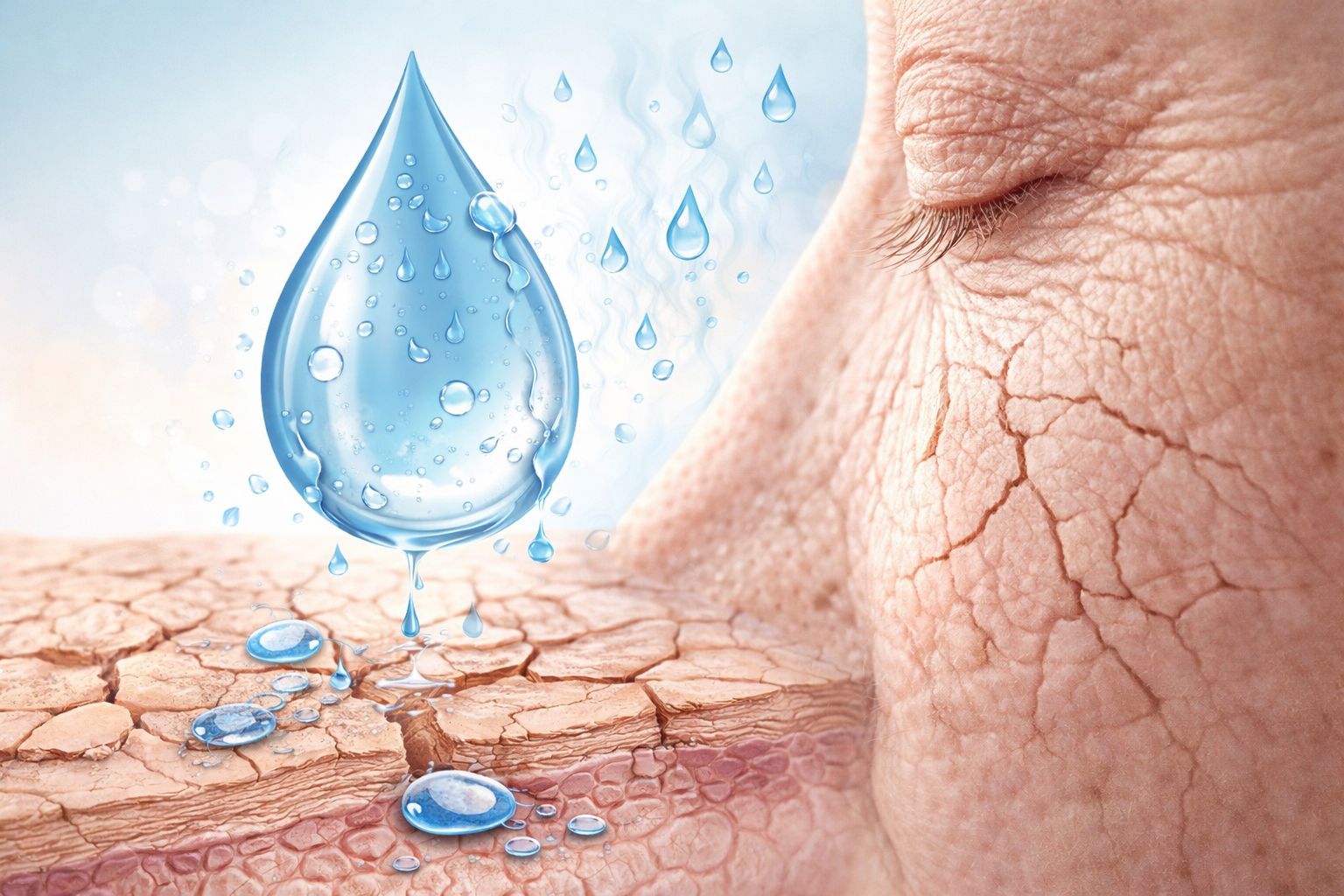
Why Aging Skin loses moisture more easily
As we get older, many people notice their skin feels drier, tighter, and less radiant than it once did. This is not just a cosmetic issue; it reflects real biological changes in how the skin holds on to moisture. Understanding why dryness increases with age can help both men and women, especially women in midlife and beyond, choose better skincare habits and products.
How the Skin’s Barrier Changes With Age
The outermost layer of skin, often called the skin barrier, acts like a protective shield. It keeps irritants out and prevents too much water from escaping. In younger skin, this barrier is more compact, well‑organized, and rich in natural lipids (fats) that seal in moisture. As we age, the barrier gradually becomes thinner and less efficient. The “mortar” between skin cells loses some of its structure, so water can evaporate more easily from the surface. This process, known as increased transepidermal water loss, is one of the main reasons mature skin often feels rough, flaky, or tight.
Inside the skin cells, natural moisturizing factors that attract and hold water also decline with age. These substances act like tiny magnets for moisture. When levels drop, the skin simply cannot stay as hydrated, even if you drink plenty of water. The result is a complexion that looks dull and feels uncomfortable, with fine lines appearing more visible when the surface is dry.
The Role of Collagen, Elastin, and Hyaluronic Acid
Deeper in the skin, structural proteins such as collagen and elastin give support, firmness, and flexibility. Over time, the body produces less of these proteins, and existing fibers break down more quickly. This weakening framework means the skin is more prone to sagging and wrinkling, and dryness makes these changes stand out even more.
Another key player is hyaluronic acid, a substance that can bind many times its weight in water. In youthful skin, hyaluronic acid helps keep the complexion plump and bouncy. With age, the amount and quality of hyaluronic acid naturally decrease, so the skin loses some of its fullness and softness. When this loss is combined with a weaker barrier and fewer natural moisturizing factors, dryness becomes a constant challenge.
Why Women Often Notice Dryness More
Both men and women experience moisture loss with age, but women often notice a sharper change, especially around perimenopause and menopause. Estrogen, a hormone that supports collagen, elastin, and hyaluronic acid production, declines during this time of life. Lower estrogen levels can lead to thinner skin, reduced oil production, and a weaker barrier. Many women report that skin which was once normal or even oily becomes noticeably drier, more sensitive, and more prone to irritation.
Men also develop drier skin as they age, but they usually start with thicker, oilier skin due to higher levels of androgens (male hormones). This means the shift to dryness can be more gradual. On a website focused on aging skin, it is important to acknowledge that both sexes are affected, while also addressing the unique hormonal changes women face.
Oil, Sweat, and the Skin’s Natural Moisture
Our skin has built‑in moisturizers: sebum (oil) from sebaceous glands and sweat from sweat glands. Sebum creates a light, protective film on the surface, helping reduce water loss. Sweat adds water, salts, and small amounts of natural moisturizing components. As we grow older, both oil and sweat production slow down. Less oil means less protection and more opportunity for moisture to escape. Reduced sweat production also means fewer natural hydrators on the skin’s surface.
For some people, this leads to a constant feeling of tightness after washing the face or body. The skin may also become more reactive because a dry, compromised barrier cannot defend as well against irritants, fragrances, or harsh ingredients.
Lifestyle and Environmental Factors That Worsen Dryness
Aging itself is only part of the picture. Daily habits and long‑term environmental exposure can speed up moisture loss and make dryness more severe.
- Sun exposure over the years damages collagen and elastin and can thin the skin’s upper layers.
- Long, hot showers or baths strip away natural oils that the skin needs to stay supple.
- Harsh cleansers and frequent exfoliation remove protective lipids and can damage the barrier.
- Indoor heating and air conditioning lower humidity, pulling water out of the skin.
- Certain medications and health conditions can also contribute to dryness in older adults.
When you combine these external factors with the internal changes of aging, it becomes clear why dryness is such a common concern for mature skin.
How to Care for Dry, Aging Skin
The good news is that age‑related dryness can be noticeably improved with the right routine and products. A few guiding principles can help both men and women maintain more comfortable, hydrated skin at any age:
- Choose gentle cleansers that do not foam excessively or leave the skin feeling “squeaky clean.” A mild formula helps preserve the natural barrier.
- Apply a moisturizer rich in skin‑supporting ingredients, such as ceramides, hyaluronic acid, glycerin, and nourishing oils. These help restore lipids, attract water, and strengthen the barrier.
- Use lukewarm water instead of hot when washing your face or showering to avoid stripping away essential oils.
- Protect your skin every day with a broad‑spectrum sunscreen, since sun damage accelerates both aging and dryness.
- Consider a humidifier in dry indoor environments to add moisture back into the air.
For women approaching or experiencing menopause, paying particular attention to barrier repair and deep hydration can make a significant difference. Products designed for mature, dry, or sensitive skin are often better suited to these changing needs.
By understanding why moisture loss increases with age, your readers can see dryness not as a personal failing, but as a natural part of the skin’s journey. With informed choices and consistent care, aging skin—whether male or female—can feel more comfortable, look more radiant, and reflect health at every stage of life.